

Desafío
A Canadian refinery observed increased foaming in an amine absorber associated with a hydrotreater. Three months prior to a turnaround, the drain valve on the inlet separator became plugged. Rather than removing hydrocarbons and other contaminants at the separator, this allowed for contaminants to pass through to the absorber, resulting in problematic foaming.
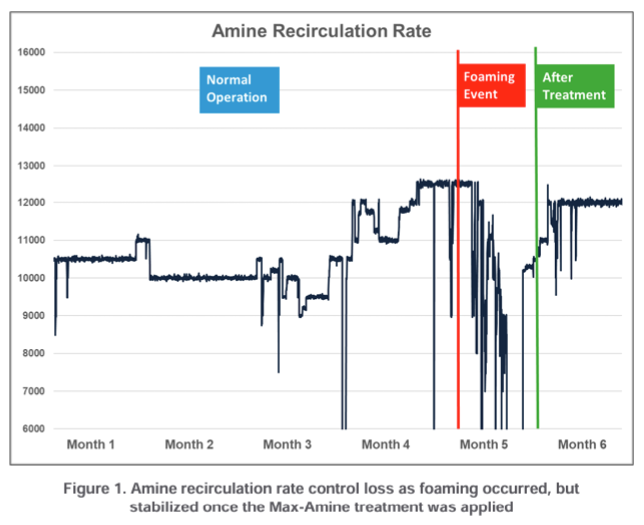
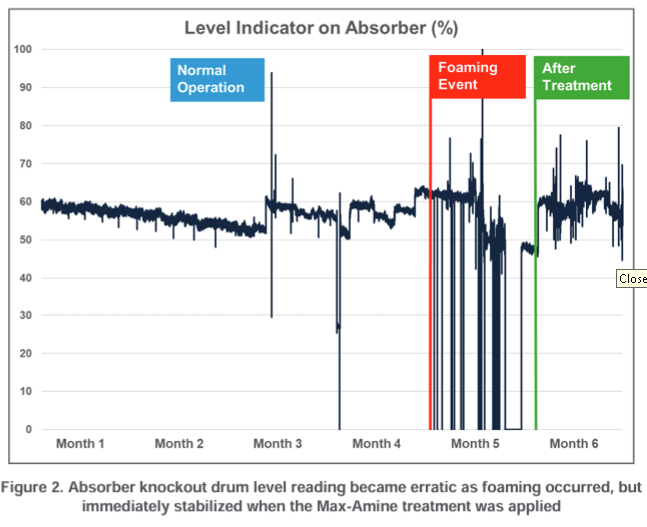
The foam created two issues. First, to manage the increased foam, the refiner must turn down the amine recirculation rate, derating the refinery capacity. This reduces the available amine for sulphur removal, potentially leading to elevated H2S residuals in the hydrotreater recycle gas stream that can be highly corrosive. Second, excess foam can lead to amine losses as the amine bleeds into the product stream leaving the absorber. This impacts amine costs, product quality, and can require product reprocessing.
The refiner was considering an unscheduled shutdown just months before a scheduled turnaround to repair the drain valve. After consulting with Veolia, the team aimed to minimize foaming, H2S release, and any production loss until the turnaround; at which point the plugged line could be safely addressed.
Solución
Max-Amine 70B is a chemical defoamer specifically formulated for the unique foaming problems found in amine systems. Max-Amine 70B is effective in controlling foaming and emulsification caused by liquid hydrocarbons and solids in an amine solution. Max-Amine 70B typically requires a lower dosage than silicon, glycol, or alcohol-based defoamers. It also does not present the same risks that other defoamers have for fouling or corrosion.
Resultado
Over the 3 months leading up to turnaround, only 60 L of Max-Amine 70B was required to mitigate further foaming events. The amine unit and hydrotreater were able to operate safely and at capacity during that period. Sulphur carryover and amine losses were both reduced to meet specifications. Canadian Refinery Controls Foaming in Amine Unit and Prevents Unplanned Shutdown with Max-Amine* CASE STUDY I Hydrocarbon Processing Improved Reliability & Productivity Prevented unplanned shutdown 2 This project resulted in a cost avoidance exceeding $100,000. It also eliminated production losses, improved equipment reliability, and improved safety until the scheduled outage allowed for necessary repairs. Max-Amine 70B is still used on site in a contingency capacity.